STORY
ABOUT THE Ficus carica
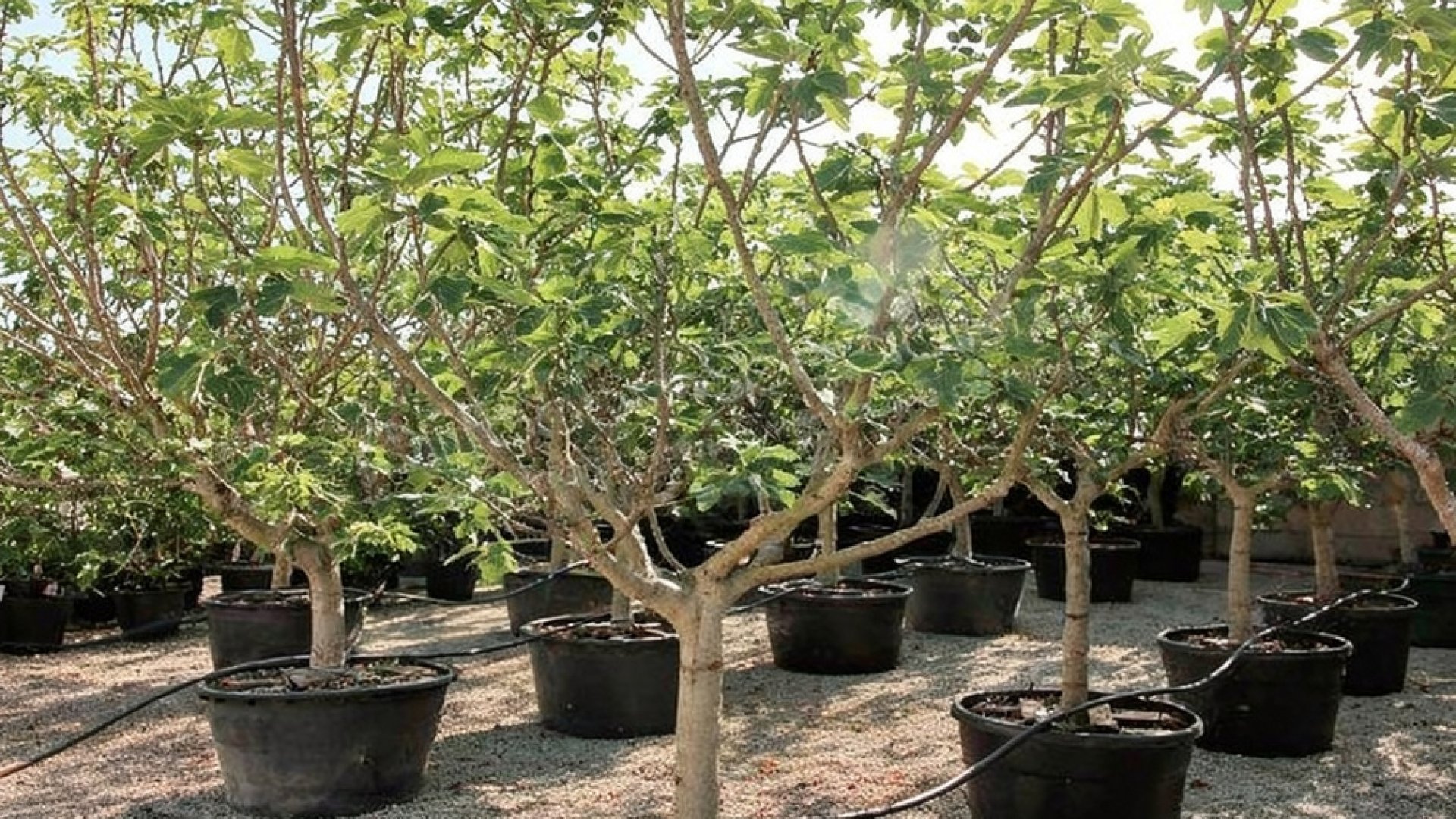
One of the oldest cultivated trees in the Mediterranean basin, the common fig delivers both outstanding ornamental value and edible fruit. Its large, deeply lobed leaves create a bold tropical feel while its gnarled trunk adds character to any garden setting. It is widely used in urban landscaping, courtyards, and residential gardens across southern Europe.
AVAILABLE DIMENSIONS
SELECT YOUR IDEAL SIZE

PLANT DETAILS
EVERYTHING YOU NEED TO KNOW
DETAILS
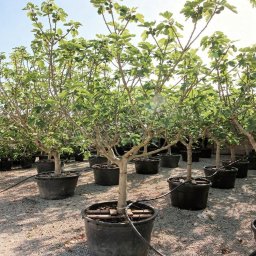
Ficus carica, the Common Fig, belongs to the Moraceae family and grows as a deciduous tree or large shrub. It features a broad, spreading crown with distinctive deeply lobed, rough-textured leaves reaching 15 to 25 cm across, providing a bold architectural silhouette. The gnarled, silvery-grey bark adds strong year-round ornamental value even in winter dormancy.
Mature specimens typically reach 3 to 10 metres in height and spread. The fig produces a unique inverted inflorescence called a syconium, which develops into the familiar sweet edible fruit. Both single-crop and double-crop cultivars are available through our wholesale Ficus carica nursery in Spain.
Mature specimens typically reach 3 to 10 metres in height and spread. The fig produces a unique inverted inflorescence called a syconium, which develops into the familiar sweet edible fruit. Both single-crop and double-crop cultivars are available through our wholesale Ficus carica nursery in Spain.
GROWING
Ficus carica thrives in well-drained, loamy to sandy soils with a pH range of 6.0 to 7.5. It requires full sun exposure of at least 6 to 8 hours daily to achieve optimal fruit production and compact, healthy growth. Established trees are notably drought-tolerant, requiring only moderate irrigation during the growing season.
Growth rate is moderate to fast under favourable conditions, with young container specimens establishing quickly after transplanting. For buyers looking to buy wholesale Common Fig Spain, our stock is produced in Mediterranean field and container conditions that ensure robust root systems and strong transplant survival rates.
Growth rate is moderate to fast under favourable conditions, with young container specimens establishing quickly after transplanting. For buyers looking to buy wholesale Common Fig Spain, our stock is produced in Mediterranean field and container conditions that ensure robust root systems and strong transplant survival rates.
CLIMATE
Ficus carica is rated for USDA hardiness zones 7 to 11, tolerating temperatures as low as minus 12 degrees Celsius when fully dormant. It excels in hot, dry Mediterranean and semi-arid climates and shows outstanding heat tolerance during prolonged summer droughts. Young plants may need winter protection in zones 7 and 8.
The species demonstrates good coastal tolerance, withstanding moderate salt-laden winds, making it suitable for seaside landscaping projects. Microclimate placement against south-facing walls significantly extends its range northward, a useful consideration for landscape architects specifying Mediterranean species in transitional climate zones.
The species demonstrates good coastal tolerance, withstanding moderate salt-laden winds, making it suitable for seaside landscaping projects. Microclimate placement against south-facing walls significantly extends its range northward, a useful consideration for landscape architects specifying Mediterranean species in transitional climate zones.
LANDSCAPING
Common Fig is highly valued in courtyard gardens, urban streetscapes, and residential Mediterranean-style planting schemes. Its bold foliage provides strong textural contrast when combined with companions such as Lavandula, Rosmarinus, and Nerium oleander. Recommended spacing for specimen planting is 4 to 6 metres, or 2 to 3 metres for informal screening. It also performs well in large containers for terrace and rooftop applications.
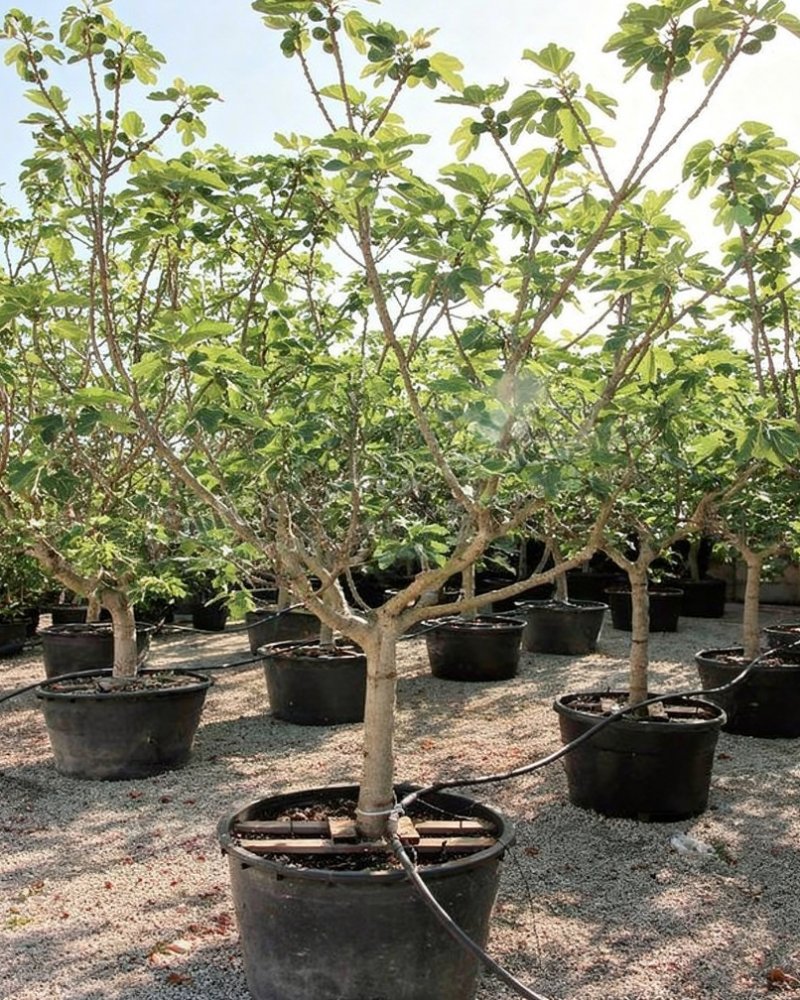
For wholesale buyers, container-grown stock is available in C15 to C45 pot sizes. Larger specimens require appropriate machinery for handling. Palletised shipping is recommended for C15 and C25 sizes. Contact our logistics team for consolidated transport options when ordering wholesale Ficus carica for landscape projects.
For wholesale buyers, container-grown stock is available in C15 to C45 pot sizes. Larger specimens require appropriate machinery for handling. Palletised shipping is recommended for C15 and C25 sizes. Contact our logistics team for consolidated transport options when ordering wholesale Ficus carica for landscape projects.
CARE
Pruning is best carried out in late winter before bud break, focusing on removing crossing branches and maintaining an open canopy for airflow and light penetration. Wear gloves when pruning as the milky latex sap can cause skin irritation. A light structural pruning in early summer after the first crop can encourage second-crop production in double-bearing cultivars.
Apply a balanced slow-release fertiliser in early spring and a low-nitrogen formula in midsummer to support fruiting. Ficus carica shows good resistance to most pests and diseases in Mediterranean conditions, though fig mosaic virus and root knot nematodes should be monitored. Mulching around the base aids moisture retention and winter root protection.
Apply a balanced slow-release fertiliser in early spring and a low-nitrogen formula in midsummer to support fruiting. Ficus carica shows good resistance to most pests and diseases in Mediterranean conditions, though fig mosaic virus and root knot nematodes should be monitored. Mulching around the base aids moisture retention and winter root protection.