STORY
ABOUT THE Olea europaea 'Leccino'
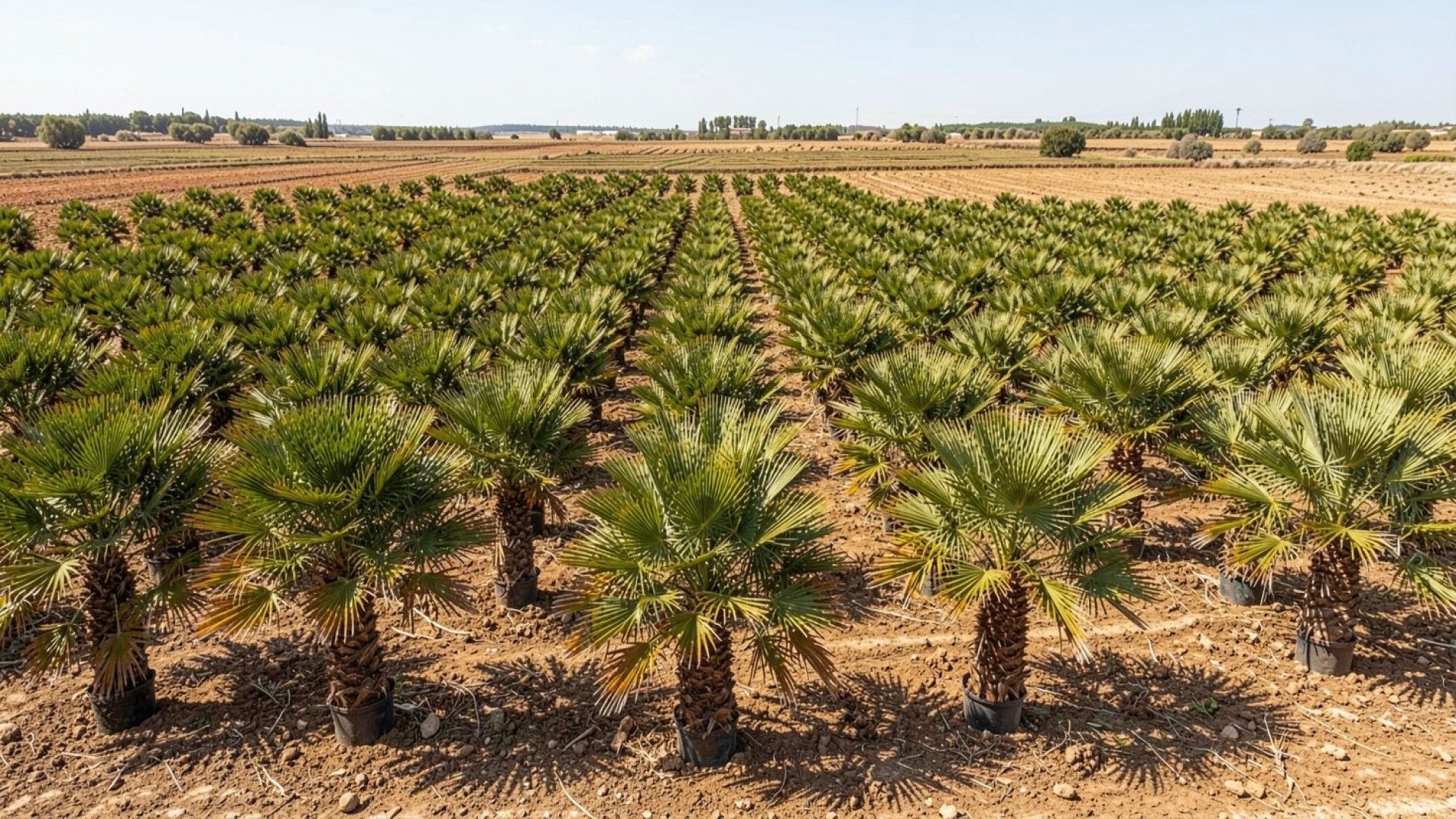
The Leccino is a classic Italian variety known for its tall, elegant growth habit and particularly smooth, pale grey bark that contrasts beautifully with its dark green, lance-shaped foliage. Mature specimens develop a distinguished, columnar silhouette that works exceptionally well in formal garden designs and avenue plantings. Its high adaptability to different climates makes it one of the most commercially sought-after tall olive varieties in wholesale trade.
AVAILABLE DIMENSIONS
SELECT YOUR IDEAL SIZE
15 L
/
14 CM CIRC.
AVAILABLE NOW
Trunk: 70cm
Height: 130cm
Pot: 30cm ⌀
35 L
/
25 CM CIRC.
AVAILABLE NOW
Trunk: 100cm
Height: 180cm
Pot: 42cm ⌀
90 L
/
45 CM CIRC.
AVAILABLE NOW
Trunk: 140cm
Height: 260cm
Pot: 60cm ⌀
200 L
/
70 CM CIRC.
AVAILABLE NOW
Trunk: 180cm
Height: 360cm
Pot: 85cm ⌀
PLANT DETAILS
EVERYTHING YOU NEED TO KNOW
DETAILS
Olea europaea 'Leccino' is a cultivated variety of the Oleaceae family, originating from Tuscany, Italy. It displays a distinctly upright, semi-columnar growth habit with smooth, pale grey bark and narrow lance-shaped leaves showing dark green upper surfaces and silvery-grey undersides. Small, fragrant white flowers appear in late spring, followed by medium-sized oval fruits that ripen to deep purple-black. Mature specimens typically reach 6 to 10 metres in height with a spread of 3 to 5 metres.
The Leccino is notably self-fertile but produces higher yields when cross-pollinated with varieties such as Frantoio or Pendolino. Its fruit has a mild, delicate flavour profile, making it commercially valuable for both table olives and high-quality olive oil production. Wholesale buyers sourcing Olea europaea 'Leccino' from specialist nurseries benefit from its consistent, elegant form across propagated stock.
The Leccino is notably self-fertile but produces higher yields when cross-pollinated with varieties such as Frantoio or Pendolino. Its fruit has a mild, delicate flavour profile, making it commercially valuable for both table olives and high-quality olive oil production. Wholesale buyers sourcing Olea europaea 'Leccino' from specialist nurseries benefit from its consistent, elegant form across propagated stock.
GROWING
Leccino Olive Trees thrive in full sun exposure with a minimum of 6 to 8 hours of direct sunlight daily. They prefer well-drained, loamy to sandy soils with a pH range of 5.5 to 8.0, tolerating both neutral and moderately alkaline conditions. Once established, watering needs are low to moderate, making this variety highly suitable for water-conscious landscape projects.
Growth rate is moderate, averaging 20 to 40 cm per year under optimal conditions. For wholesale Leccino Olive Tree production, container-grown specimens in nutrient-balanced growing media establish reliably post-transplant. Avoid waterlogged or heavy clay soils, which restrict root development and reduce long-term vigour.
Growth rate is moderate, averaging 20 to 40 cm per year under optimal conditions. For wholesale Leccino Olive Tree production, container-grown specimens in nutrient-balanced growing media establish reliably post-transplant. Avoid waterlogged or heavy clay soils, which restrict root development and reduce long-term vigour.
CLIMATE
Olea europaea 'Leccino' is rated for USDA hardiness zones 8 to 11, tolerating winter temperatures down to approximately minus 10 degrees Celsius for short periods. Its cold hardiness is notably superior to many other olive cultivars, making it a preferred choice for wholesale buyers in transitional or cooler Mediterranean climates. It performs exceptionally well across southern Europe, the Pacific Coast, Australia, South Africa, and California.
The variety demonstrates strong heat tolerance and excellent drought resistance once established, adapting well to coastal environments with moderate salt exposure. Inland plantings in frost-prone areas benefit from sheltered microclimates or south-facing aspects. Buyers looking to buy wholesale Leccino Olive Trees in Spain or broader Mediterranean regions will find this cultivar reliably suited to diverse site conditions.
The variety demonstrates strong heat tolerance and excellent drought resistance once established, adapting well to coastal environments with moderate salt exposure. Inland plantings in frost-prone areas benefit from sheltered microclimates or south-facing aspects. Buyers looking to buy wholesale Leccino Olive Trees in Spain or broader Mediterranean regions will find this cultivar reliably suited to diverse site conditions.
LANDSCAPING
The upright, columnar silhouette of the Leccino makes it ideal for formal avenue plantings, entrance alignments, large residential gardens, and architectural landscape schemes. It pairs effectively with lavender, rosemary, Cistus, ornamental grasses, and Pittosporum for cohesive Mediterranean planting designs. Recommended spacing for avenue use is 4 to 6 metres apart, while specimen planting allows wider spacing of 6 to 8 metres.
For wholesale buyers, container sizes typically range from 45-litre to 500-litre pots, with larger specimens requiring crane-assisted offloading. Semi-mature trees in 200-litre containers average 400 to 600 kg and need flatbed transport with secure strapping. Early ordering from a trusted wholesale Olea europaea 'Leccino' nursery is advisable for large-scale projects to ensure consistent stock availability and uniform sizing.
For wholesale buyers, container sizes typically range from 45-litre to 500-litre pots, with larger specimens requiring crane-assisted offloading. Semi-mature trees in 200-litre containers average 400 to 600 kg and need flatbed transport with secure strapping. Early ordering from a trusted wholesale Olea europaea 'Leccino' nursery is advisable for large-scale projects to ensure consistent stock availability and uniform sizing.
CARE
Pruning should be carried out in late spring after any frost risk has passed, focusing on maintaining the characteristic upright form, removing crossing branches, and improving canopy airflow. An annual light trim is sufficient for ornamental specimens, while harder renovation pruning can be applied every 3 to 5 years if needed. Apply a balanced slow-release fertiliser in early spring, supplemented with a potassium-rich feed in summer to support fruiting and stem hardiness.
Leccino Olive Trees show good resistance to Verticillium wilt and moderate resistance to olive knot (Pseudomonas savastanoi) compared to other cultivars. Monitor for olive moth (Prays oleae) and scale insects in warmer seasons. Established trees require minimal winter protection in zones 8 and above, though young transplants benefit from fleece wrapping during their first winter in exposed sites.
Leccino Olive Trees show good resistance to Verticillium wilt and moderate resistance to olive knot (Pseudomonas savastanoi) compared to other cultivars. Monitor for olive moth (Prays oleae) and scale insects in warmer seasons. Established trees require minimal winter protection in zones 8 and above, though young transplants benefit from fleece wrapping during their first winter in exposed sites.