STORY
ABOUT THE Phoenix canariensis
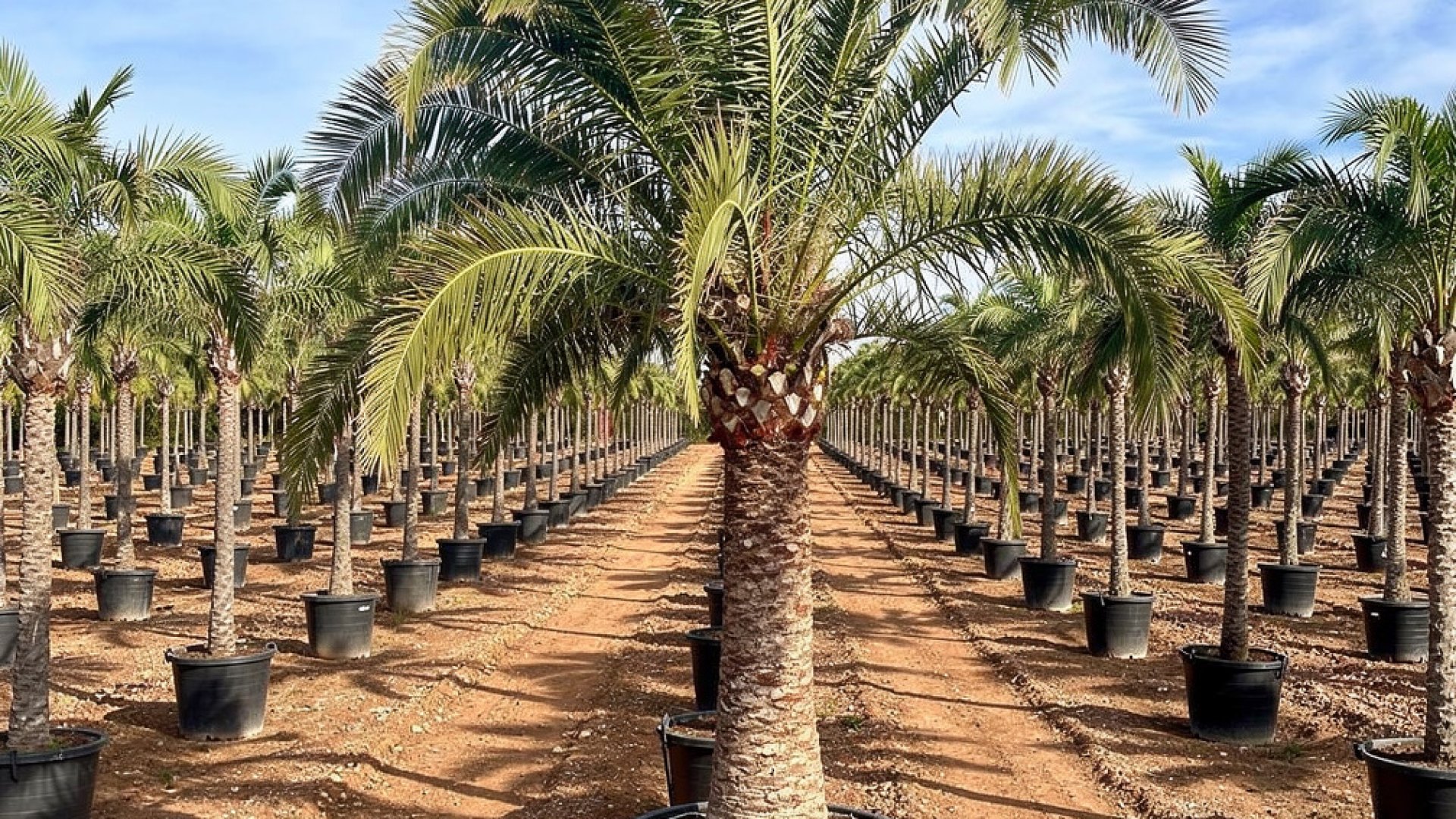
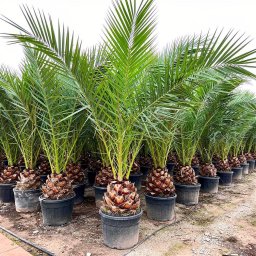
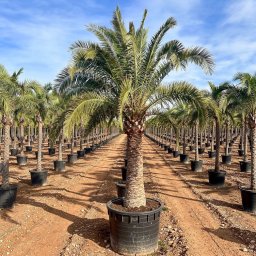
One of the most widely cultivated ornamental palms in Spain, prized for its impressive crown of arching feathery fronds and robust trunk. It thrives in full sun and tolerates mild drought, making it a top choice for large-scale landscaping projects, avenues, and resort gardens across the Mediterranean region.
AVAILABLE DIMENSIONS
SELECT YOUR IDEAL SIZE
PLANT DETAILS
EVERYTHING YOU NEED TO KNOW
DETAILS
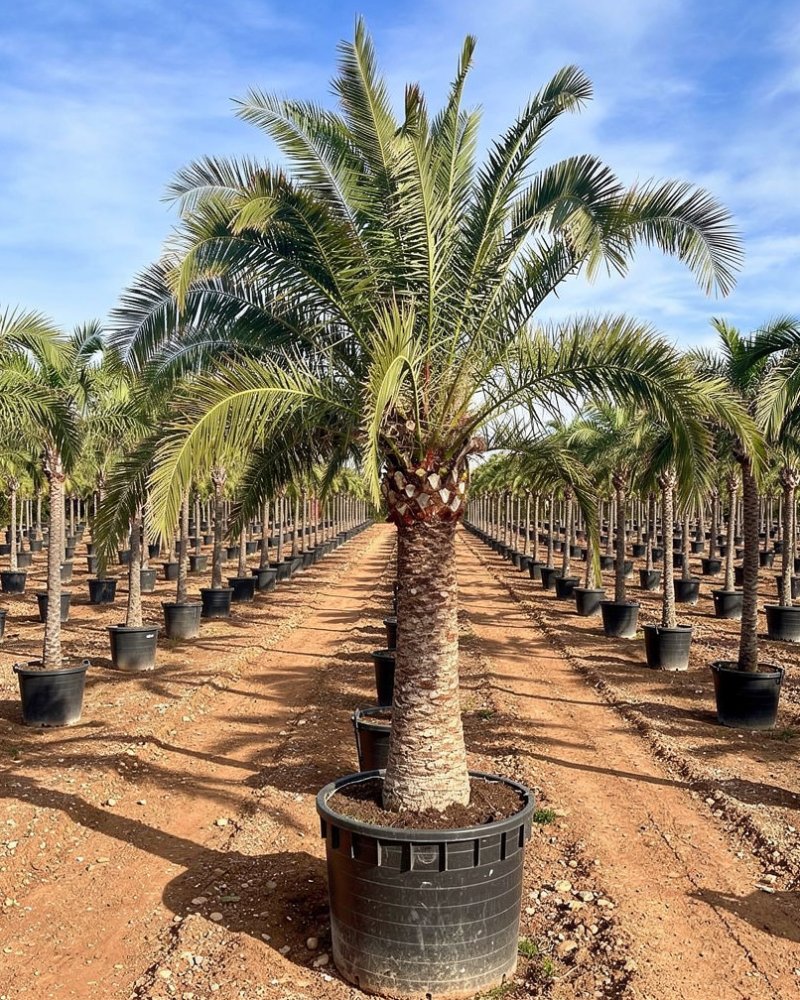
Phoenix canariensis belongs to the family Arecaceae and is a large, solitary-trunked palm native to the Canary Islands. It develops a stout, patterned trunk covered in distinctive diamond-shaped leaf base scars, crowned by a dense, arching canopy of pinnate fronds that can reach 5 to 6 meters in length. Mature specimens can exceed 15 to 20 meters in height with a crown spread of 8 to 10 meters, making it one of the most architecturally imposing palms available from wholesale Phoenix canariensis nurseries.
Flowering occurs in spring, producing long, branched inflorescences bearing small cream-colored flowers. Female trees yield clusters of orange-yellow date-like fruits, though these are not commercially harvested for consumption. The feathery, deep green fronds and robust trunk texture make this species a benchmark ornamental palm for large-scale Mediterranean landscaping projects.
Flowering occurs in spring, producing long, branched inflorescences bearing small cream-colored flowers. Female trees yield clusters of orange-yellow date-like fruits, though these are not commercially harvested for consumption. The feathery, deep green fronds and robust trunk texture make this species a benchmark ornamental palm for large-scale Mediterranean landscaping projects.
GROWING
Phoenix canariensis thrives in well-drained sandy or loamy soils with a pH range of 6.0 to 7.5. It demands full sun exposure for optimal growth and canopy development, performing poorly in shaded or waterlogged conditions. Although established specimens tolerate moderate drought, regular irrigation during the first two to three years accelerates establishment and promotes a fuller crown.
Growth rate is moderate, averaging 30 to 60 centimeters of trunk height per year under favorable conditions. Buyers sourcing wholesale Canary Island Date Palm Spain will find that nursery-grown specimens in large containers are well-rooted and ready for direct landscape installation, significantly reducing establishment time on commercial projects.
Growth rate is moderate, averaging 30 to 60 centimeters of trunk height per year under favorable conditions. Buyers sourcing wholesale Canary Island Date Palm Spain will find that nursery-grown specimens in large containers are well-rooted and ready for direct landscape installation, significantly reducing establishment time on commercial projects.
CLIMATE
This species is well adapted to USDA hardiness zones 9 to 11, tolerating brief temperature dips to approximately minus 8 degrees Celsius once fully established. It performs exceptionally across Mediterranean, subtropical, and semi-arid climates, thriving in the high heat and intense sun characteristic of southern Spain, Portugal, and coastal North Africa. Young or recently transplanted specimens benefit from frost protection during their first winters.
Phoenix canariensis demonstrates excellent coastal tolerance, withstanding salt-laden winds and sandy coastal soils, making it ideal for resort and seafront developments. In marginal zones, planting in sheltered microclimates with good southern exposure can extend its viable range, broadening its appeal for landscape architects specifying plants for transitional climate regions.
Phoenix canariensis demonstrates excellent coastal tolerance, withstanding salt-laden winds and sandy coastal soils, making it ideal for resort and seafront developments. In marginal zones, planting in sheltered microclimates with good southern exposure can extend its viable range, broadening its appeal for landscape architects specifying plants for transitional climate regions.
LANDSCAPING
Phoenix canariensis is the definitive statement palm for avenue planting, hotel entrances, resort gardens, golf courses, and large public squares. Recommended spacing for avenue installations is 6 to 8 meters between specimens. Effective companion plants include Agave americana, Washingtonia robusta, Bougainvillea, and ornamental grasses that complement its tropical-Mediterranean aesthetic without competing for canopy space.
For wholesale buyers, logistics planning is critical. Mature container specimens in 500 to 5000 liter pots can weigh several tonnes and require crane-assisted loading and specialized flatbed transport. Root ball stability must be secured with appropriate bracing during transit. Our nursery offers pre-shipment consultation to coordinate delivery scheduling, container sizing, and handling requirements for large commercial orders across Europe.
For wholesale buyers, logistics planning is critical. Mature container specimens in 500 to 5000 liter pots can weigh several tonnes and require crane-assisted loading and specialized flatbed transport. Root ball stability must be secured with appropriate bracing during transit. Our nursery offers pre-shipment consultation to coordinate delivery scheduling, container sizing, and handling requirements for large commercial orders across Europe.
CARE
Annual pruning should be limited to removing dead, browning, or fully dry fronds, cutting cleanly at the base of the petiole. Over-pruning, particularly the removal of green fronds, stresses the palm and slows growth. A balanced slow-release palm fertilizer with magnesium and micronutrients should be applied two to three times per year during the growing season to prevent potassium and magnesium deficiencies, which manifest as frond yellowing.
Phoenix canariensis is susceptible to Rhynchophorus ferrugineus (red palm weevil), which requires preventive systemic insecticide treatments in affected regions. Fusarium wilt is a serious concern in some areas and cannot be cured, making certified disease-free stock from reputable wholesale nurseries essential. Long-term maintenance costs are low for established specimens, reinforcing its value as a premium landscape investment.
Phoenix canariensis is susceptible to Rhynchophorus ferrugineus (red palm weevil), which requires preventive systemic insecticide treatments in affected regions. Fusarium wilt is a serious concern in some areas and cannot be cured, making certified disease-free stock from reputable wholesale nurseries essential. Long-term maintenance costs are low for established specimens, reinforcing its value as a premium landscape investment.