STORY
ABOUT THE Phoenix dactylifera
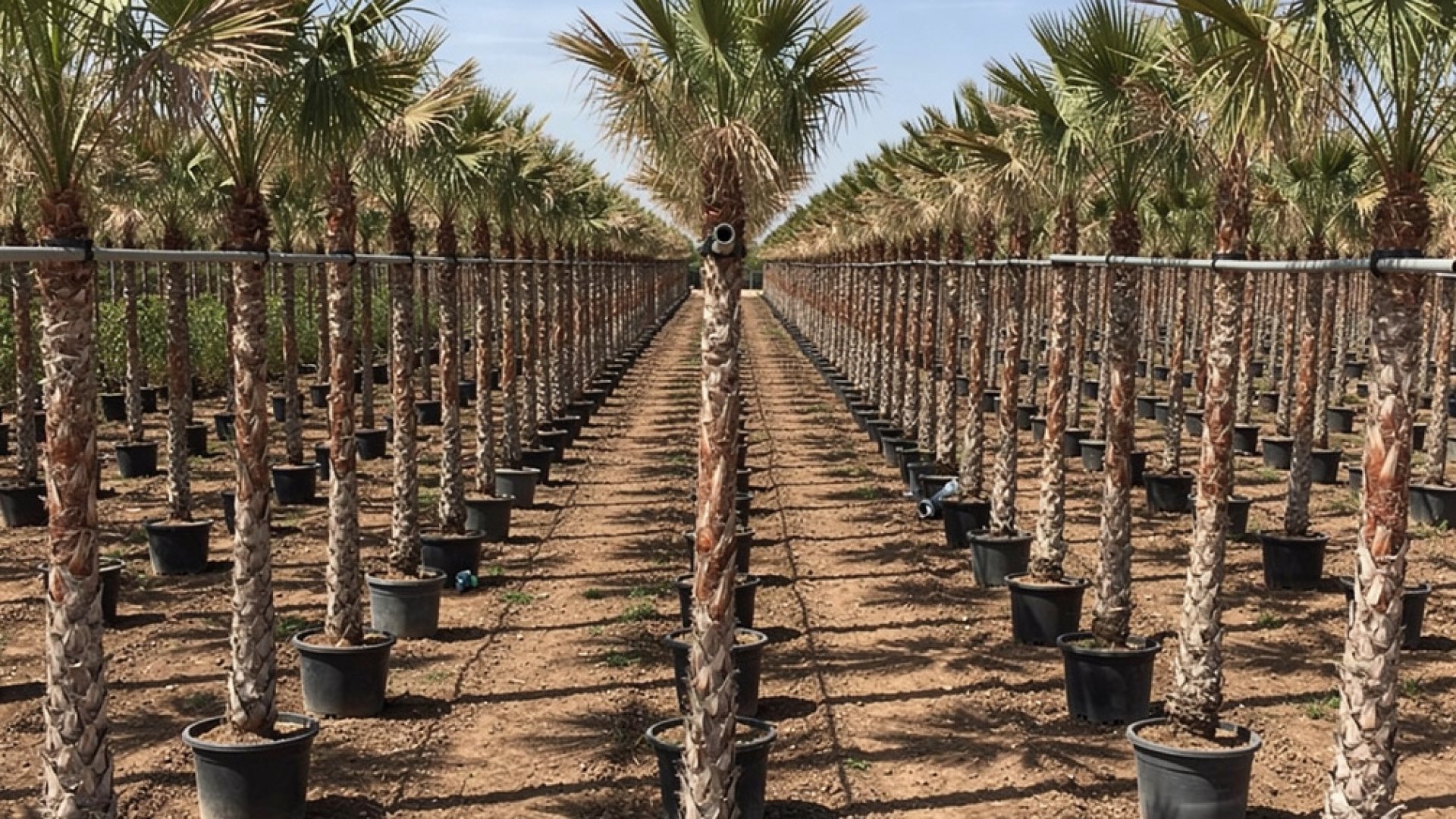
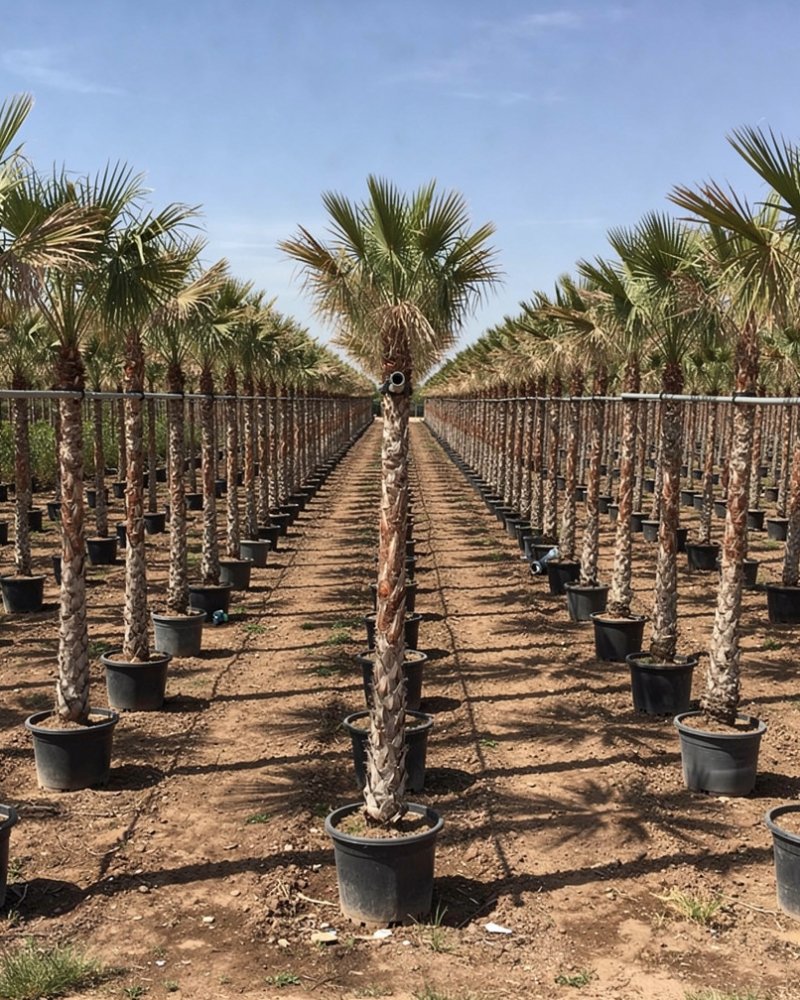
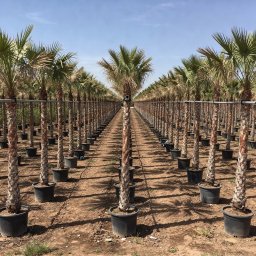
A staple of warm Mediterranean and subtropical landscapes, the Date Palm is grown extensively in southeastern Spain, particularly in the famous palm groves of Elche. Its elegant silhouette and historical significance make it highly sought after by landscape architects looking to create authentic Mediterranean settings.
AVAILABLE DIMENSIONS
SELECT YOUR IDEAL SIZE
300 L
/
95 CM CIRC.
AVAILABLE NOW
Trunk: 250cm
Height: 500cm
Pot: 95cm ⌀
PLANT DETAILS
EVERYTHING YOU NEED TO KNOW
DETAILS
Phoenix dactylifera, commonly known as the Date Palm, belongs to the family Arecaceae. It is a dioecious, single-trunked palm reaching 15 to 25 meters at maturity, featuring a distinctive textured trunk covered in old leaf base scars. Its arching pinnate fronds, measuring up to 6 meters long, are composed of stiff, glaucous grey-green leaflets with sharp basal spines.
Female specimens produce large pendant clusters of edible dates when pollinated, making them commercially and ornamentally valuable. The Date Palm is iconic in Mediterranean wholesale palm supply, particularly sourced from the UNESCO-listed palm groves of Elche, southeastern Spain, where centuries-old cultivation traditions ensure superior specimen quality.
Female specimens produce large pendant clusters of edible dates when pollinated, making them commercially and ornamentally valuable. The Date Palm is iconic in Mediterranean wholesale palm supply, particularly sourced from the UNESCO-listed palm groves of Elche, southeastern Spain, where centuries-old cultivation traditions ensure superior specimen quality.
GROWING
Phoenix dactylifera thrives in deep, well-drained sandy or loamy soils with a pH range of 7.0 to 8.0. It requires full sun exposure for optimal growth and fruiting. Once established, it is highly drought-tolerant but benefits from regular deep watering during the growing season to support vigorous development and canopy density.
Growth rate is moderate, averaging 30 to 60 centimeters per year under favorable conditions. It performs best in USDA Hardiness Zones 9 through 11. Nurseries supplying wholesale Phoenix dactylifera from Spain typically offer container-grown or field-dug specimens that have been acclimatized for reliable establishment across Southern Europe and the Mediterranean basin.
Growth rate is moderate, averaging 30 to 60 centimeters per year under favorable conditions. It performs best in USDA Hardiness Zones 9 through 11. Nurseries supplying wholesale Phoenix dactylifera from Spain typically offer container-grown or field-dug specimens that have been acclimatized for reliable establishment across Southern Europe and the Mediterranean basin.
CLIMATE
Phoenix dactylifera is exceptionally heat-tolerant, thriving in arid and semi-arid climates with long, hot summers and low humidity. It is classified within USDA Zones 9 to 11 and can tolerate brief cold spells down to approximately minus 6 degrees Celsius when mature and established, though young specimens require frost protection.
It demonstrates strong coastal tolerance, withstanding salt-laden winds and sandy coastal soils, making it ideal for seaside resort and marina landscaping projects. Microclimate considerations are important in Zone 9 margins where south-facing, sheltered positions significantly improve winter survival. Buyers sourcing wholesale Date Palms from Spain benefit from specimens already adapted to Mediterranean climate extremes.
It demonstrates strong coastal tolerance, withstanding salt-laden winds and sandy coastal soils, making it ideal for seaside resort and marina landscaping projects. Microclimate considerations are important in Zone 9 margins where south-facing, sheltered positions significantly improve winter survival. Buyers sourcing wholesale Date Palms from Spain benefit from specimens already adapted to Mediterranean climate extremes.
LANDSCAPING
Phoenix dactylifera is a premium choice for landmark planting in luxury resorts, hotel grounds, public parks, golf courses, and urban avenues. Its tall, sculptural form creates authentic Mediterranean and Middle Eastern ambiance. Recommended spacing for avenue planting is 6 to 10 meters apart. Companion plants include Agave, Bougainvillea, Lavandula, and Strelitzia for cohesive warm-climate compositions.
For wholesale buyers, transport logistics require careful planning due to specimen size and weight. Large field-dug palms are typically shipped secured on flatbed transport with root balls wrapped and stabilized. Buyers purchasing wholesale Phoenix dactylifera from Spain should coordinate delivery schedules to avoid frost periods and ensure adequate machinery for on-site installation.
For wholesale buyers, transport logistics require careful planning due to specimen size and weight. Large field-dug palms are typically shipped secured on flatbed transport with root balls wrapped and stabilized. Buyers purchasing wholesale Phoenix dactylifera from Spain should coordinate delivery schedules to avoid frost periods and ensure adequate machinery for on-site installation.
CARE
Pruning should be limited to removing dead or fully dried fronds annually, as over-pruning weakens the palm and reduces its ornamental value. A balanced slow-release palm fertilizer applied two to three times per year, rich in potassium and magnesium, supports healthy frond production and disease resistance. Young specimens benefit from additional iron supplementation to prevent chlorosis in alkaline soils.
Phoenix dactylifera shows good resistance to most common pests, though it is susceptible to Rhynchophorus ferrugineus, the red palm weevil, which requires preventive systemic treatments in affected regions. Regular inspection is essential for large landscape installations. Long-term maintenance is low once established, making it a cost-effective investment for professional landscaping projects across Mediterranean climates.
Phoenix dactylifera shows good resistance to most common pests, though it is susceptible to Rhynchophorus ferrugineus, the red palm weevil, which requires preventive systemic treatments in affected regions. Regular inspection is essential for large landscape installations. Long-term maintenance is low once established, making it a cost-effective investment for professional landscaping projects across Mediterranean climates.