STORY
ABOUT THE Washingtonia robusta
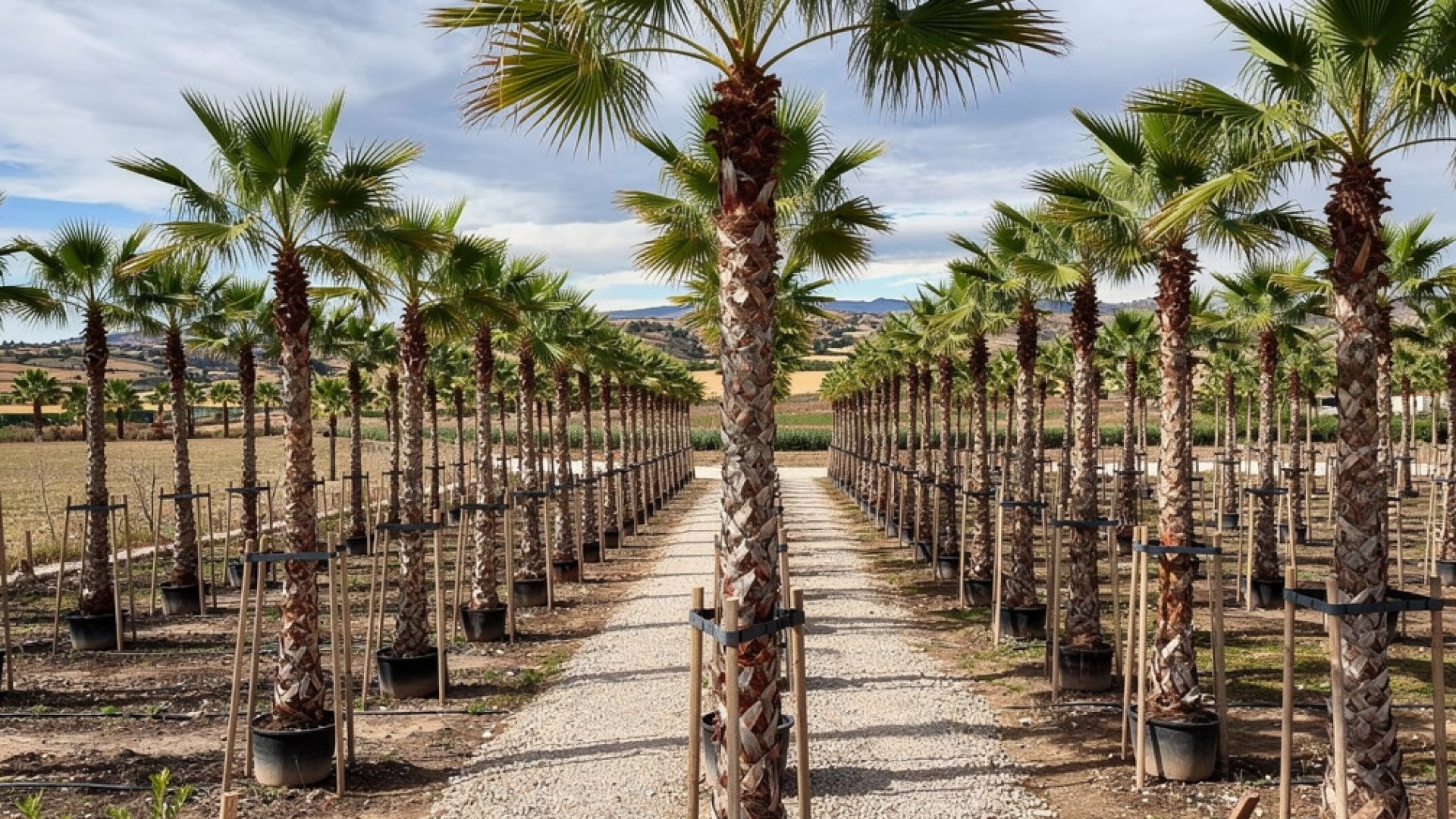
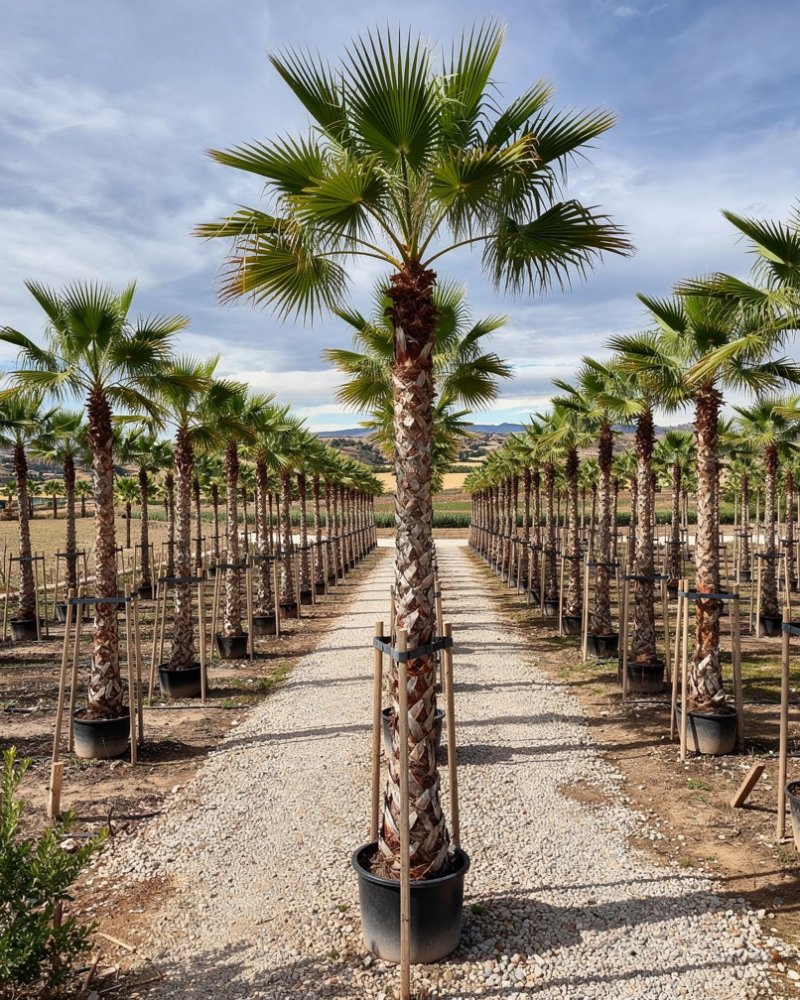
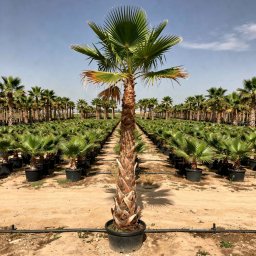
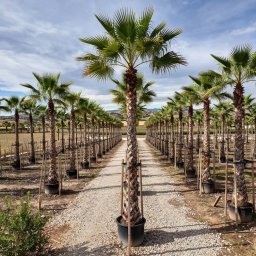
Extremely popular in Spanish nursery production due to its fast growth rate and tall, slender trunk topped with a lush fan-shaped crown. This palm is a go-to species for creating dramatic vertical accents in parks, coastal promenades, and urban streetscaping projects.
AVAILABLE DIMENSIONS
SELECT YOUR IDEAL SIZE
PLANT DETAILS
EVERYTHING YOU NEED TO KNOW
DETAILS
Washingtonia robusta, commonly known as the Mexican Fan Palm, belongs to the family Arecaceae. It produces a tall, slender trunk that can reach 25 to 30 meters at maturity, topped with a dense crown of palmate, bright green fronds spanning up to 1.5 meters. The fronds feature distinctive drooping tips and fibrous thread-like filaments along the leaf margins, giving the crown a lush, tropical appearance year-round.
In late spring and early summer, mature specimens produce long, arching cream-colored flower clusters that develop into small, dark purple-black fruits favored by birds. The persistent dead fronds form a characteristic brown skirt along the upper trunk unless removed, adding a recognizable textural element that professionals often use to enhance exotic streetscape aesthetics.
In late spring and early summer, mature specimens produce long, arching cream-colored flower clusters that develop into small, dark purple-black fruits favored by birds. The persistent dead fronds form a characteristic brown skirt along the upper trunk unless removed, adding a recognizable textural element that professionals often use to enhance exotic streetscape aesthetics.
GROWING
Washingtonia robusta thrives in well-drained sandy or loamy soils with a pH range of 6.0 to 7.5. It requires full sun exposure for optimal growth and performs poorly in shaded or poorly ventilated locations. Young specimens benefit from regular irrigation during establishment, after which they demonstrate strong drought tolerance. Growth rates are notably fast, often exceeding one meter per year under favorable conditions, making this species highly efficient for large-scale nursery production in Spain.
For wholesale Washingtonia robusta nursery stock, container-grown specimens adapt readily to transplanting when root development is well managed. Avoid waterlogged soils, as prolonged root saturation can cause decline. Minimal soil amendment is typically required, which reduces production costs and makes this palm an economically attractive choice for buyers sourcing wholesale Mexican Fan Palm from Spain.
For wholesale Washingtonia robusta nursery stock, container-grown specimens adapt readily to transplanting when root development is well managed. Avoid waterlogged soils, as prolonged root saturation can cause decline. Minimal soil amendment is typically required, which reduces production costs and makes this palm an economically attractive choice for buyers sourcing wholesale Mexican Fan Palm from Spain.
CLIMATE
Washingtonia robusta is rated for USDA hardiness zones 9 to 11, tolerating brief temperature drops to approximately minus 5 degrees Celsius without significant damage when plants are well established. It excels in hot, dry Mediterranean and semi-arid climates, demonstrating exceptional heat tolerance and performing well in coastal environments where salt spray and strong winds are common. Younger specimens may require frost protection in marginal zones during their first two winters.
This species is particularly well suited to southern European climates, the Middle East, North Africa, and warm temperate regions of Australia and the Americas. Its adaptability to urban heat island conditions and tolerance for compacted or poor soils make it a reliable performer in high-stress landscape environments, which is a key selling point for professional buyers and landscapers sourcing Mediterranean palm species.
This species is particularly well suited to southern European climates, the Middle East, North Africa, and warm temperate regions of Australia and the Americas. Its adaptability to urban heat island conditions and tolerance for compacted or poor soils make it a reliable performer in high-stress landscape environments, which is a key selling point for professional buyers and landscapers sourcing Mediterranean palm species.
LANDSCAPING
Washingtonia robusta is a first-choice species for creating bold vertical accents in urban streetscaping, coastal promenades, resort developments, and large-scale public parks. It works exceptionally well planted in formal allees or staggered rows, with spacing of 4 to 6 meters recommended for avenue plantings. Effective companion plants include Agave, Bougainvillea, Lantana, and lower-growing Phoenix species that complement its upright silhouette without competing for canopy space.
For wholesale buyers considering logistics, container sizes typically range from 25-litre pots for younger stock to large wooden crates for specimens with 3 to 5 meters of clear trunk. Taller specimens require crane-assisted loading and specialized flatbed transport. Spanish nursery suppliers typically offer pallets of uniform young stock for cost-effective bulk shipping across Europe and export markets.
For wholesale buyers considering logistics, container sizes typically range from 25-litre pots for younger stock to large wooden crates for specimens with 3 to 5 meters of clear trunk. Taller specimens require crane-assisted loading and specialized flatbed transport. Spanish nursery suppliers typically offer pallets of uniform young stock for cost-effective bulk shipping across Europe and export markets.
CARE
Washingtonia robusta requires minimal pruning beyond the removal of dead or fully browned fronds. Over-pruning of green fronds is strongly discouraged as it stresses the palm and slows growth. A balanced slow-release palm fertilizer applied two to three times annually, with attention to magnesium and potassium levels, supports healthy frond production and trunk development. Avoid high-nitrogen formulas that encourage soft growth susceptible to fungal issues.
This species shows strong resistance to most common palm pests but can occasionally be affected by the red palm weevil (Rhynchophorus ferrugineus), requiring preventive treatment in affected regions. Fungal issues are rare in well-drained conditions. Long-term maintenance is straightforward, making Washingtonia robusta a low-cost, high-impact choice for professionals seeking durable, low-maintenance palms for large landscape projects.
This species shows strong resistance to most common palm pests but can occasionally be affected by the red palm weevil (Rhynchophorus ferrugineus), requiring preventive treatment in affected regions. Fungal issues are rare in well-drained conditions. Long-term maintenance is straightforward, making Washingtonia robusta a low-cost, high-impact choice for professionals seeking durable, low-maintenance palms for large landscape projects.