STORY
ABOUT THE Yucca filifera
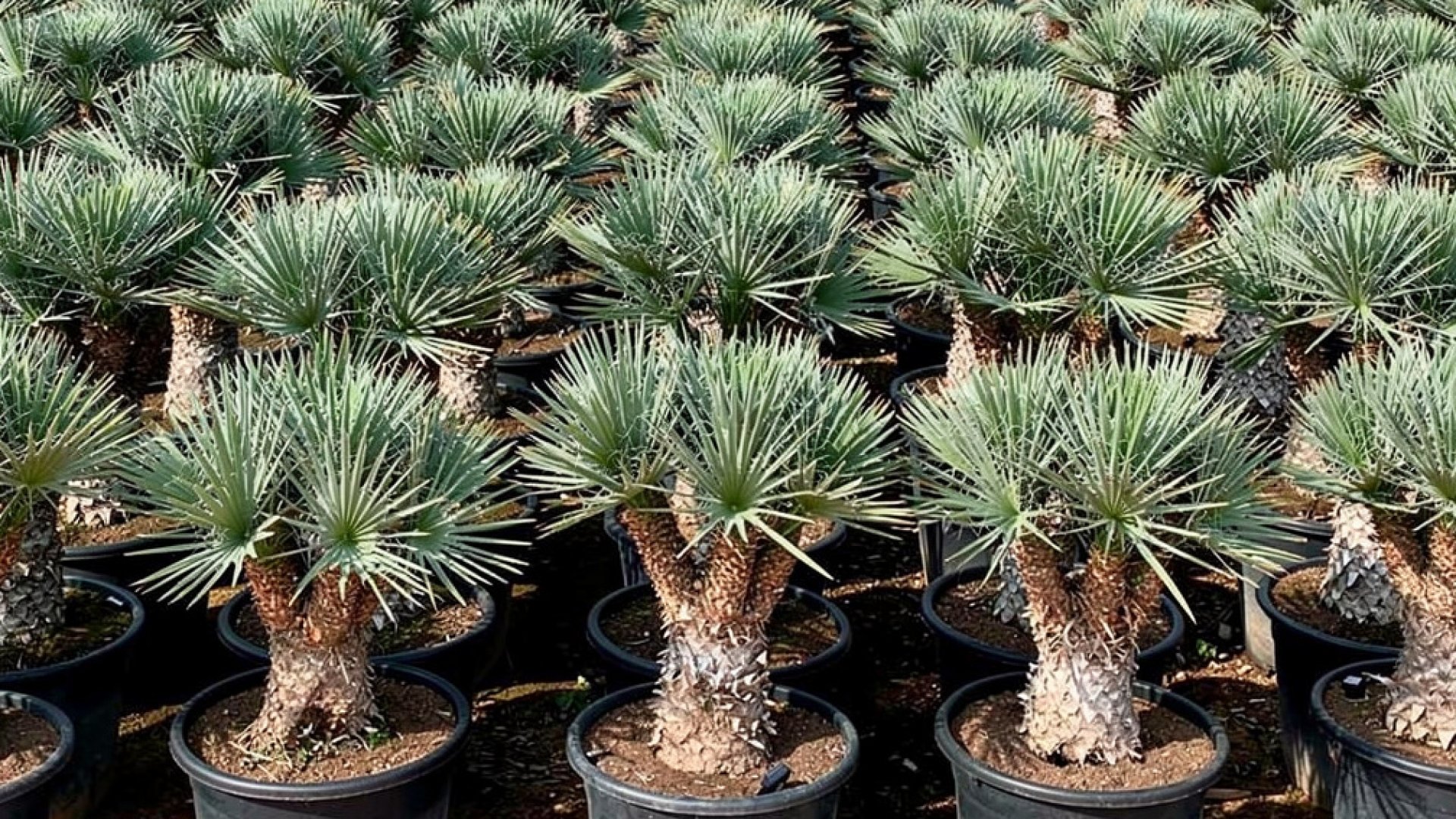
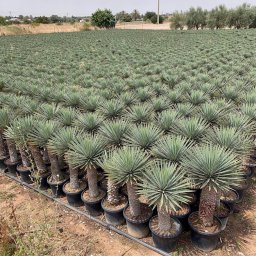
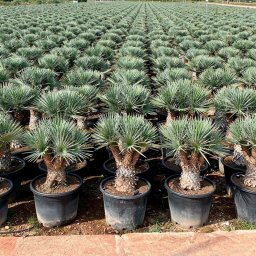
Native to central Mexico, Yucca filifera develops into a tall, multi-headed tree over time, forming an impressive structural focal point in large-scale landscapes. Its rosettes of stiff, dark green leaves edged with fine white threads give it a distinctive textural quality that complements both contemporary and rustic garden styles. Exceptionally heat and drought tolerant, it is a low-maintenance choice for dry Mediterranean climates.
AVAILABLE DIMENSIONS
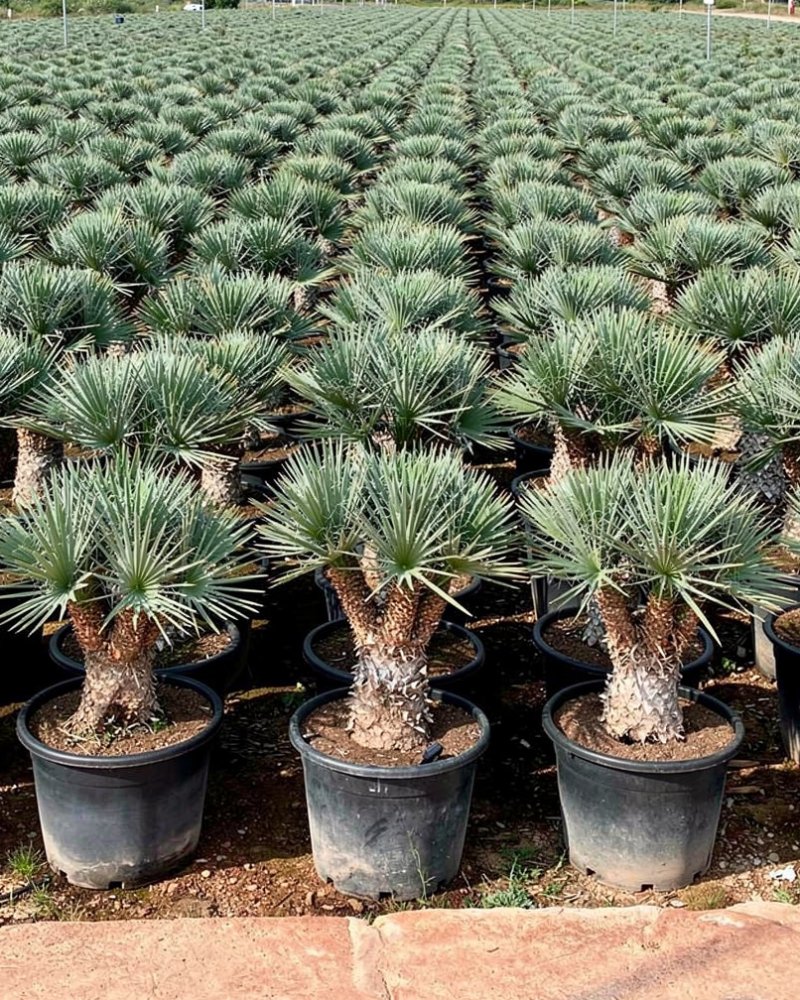
SELECT YOUR IDEAL SIZE
PLANT DETAILS
EVERYTHING YOU NEED TO KNOW
DETAILS
Yucca filifera, commonly known as the Saint Peter Palm, belongs to the family Asparagaceae and is native to the semi-arid regions of central Mexico. It develops a thick, fibrous trunk over time, eventually branching into multiple heads, each crowned with dense rosettes of rigid, dark green leaves edged with characteristic fine white curling threads. Mature specimens can reach 8 to 10 metres in height, making it one of the largest yucca species available from wholesale desert plant nurseries.
The flowering season produces tall panicles of creamy white bell-shaped flowers, typically in summer, followed by fleshy edible fruits. Its architectural silhouette and bold textural foliage make it a distinctive structural specimen for large-scale projects.
The flowering season produces tall panicles of creamy white bell-shaped flowers, typically in summer, followed by fleshy edible fruits. Its architectural silhouette and bold textural foliage make it a distinctive structural specimen for large-scale projects.
GROWING
Yucca filifera thrives in well-drained, sandy or rocky soils with a slightly acidic to neutral pH range of 6.0 to 7.5. It requires full sun exposure for optimal development and should never be planted in poorly drained or waterlogged conditions, which can cause rapid root rot. Growth rate is slow to moderate, averaging 20 to 30 cm per year under ideal conditions.
Once established, watering needs are minimal, making it highly suited for xeriscaping and low-irrigation landscape schemes. Buyers sourcing wholesale Yucca filifera for Mediterranean or arid-climate projects will find it exceptionally reliable and low-input.
Once established, watering needs are minimal, making it highly suited for xeriscaping and low-irrigation landscape schemes. Buyers sourcing wholesale Yucca filifera for Mediterranean or arid-climate projects will find it exceptionally reliable and low-input.
CLIMATE
Yucca filifera is rated hardy to USDA zones 8 to 11, tolerating brief temperature drops to approximately minus 10 degrees Celsius when established and grown in well-drained conditions. It excels in hot, dry continental and Mediterranean climates and demonstrates outstanding heat tolerance, performing well across southern Spain, Portugal, Italy, and similar regions.
Drought tolerance is excellent once rooted, and it adapts well to coastal environments provided soils are free-draining and salt exposure is moderate. Microclimate considerations include avoiding frost pockets and providing wind shelter for younger plants to prevent mechanical leaf damage.
Drought tolerance is excellent once rooted, and it adapts well to coastal environments provided soils are free-draining and salt exposure is moderate. Microclimate considerations include avoiding frost pockets and providing wind shelter for younger plants to prevent mechanical leaf damage.
LANDSCAPING
Wholesale Saint Peter Palm specimens are ideal as structural focal points in large public gardens, resort landscapes, commercial planting schemes, and contemporary xeriscapes. They pair effectively with Agave americana, Dasylirion species, ornamental grasses, and low groundcover succulents, creating bold desert-themed compositions. Recommended spacing for multi-specimen planting is 4 to 6 metres to allow full canopy development.
For wholesale buyers purchasing Yucca filifera from a wholesale nursery in Spain, note that larger specimens in 45 to 200 litre containers are heavy and require forklift handling. Secure strapping around the trunk base is recommended during transport to prevent rosette damage and soil displacement.
For wholesale buyers purchasing Yucca filifera from a wholesale nursery in Spain, note that larger specimens in 45 to 200 litre containers are heavy and require forklift handling. Secure strapping around the trunk base is recommended during transport to prevent rosette damage and soil displacement.
CARE
Pruning requirements are minimal and limited to removing spent flower stalks and dead lower leaves to maintain a clean aesthetic. Avoid over-pruning the foliage crown, as this can stress the plant and reduce vigour. Fertilisation should be light, applying a balanced slow-release fertiliser once in early spring to support steady growth without forcing excessive soft tissue.
Yucca filifera has strong natural resistance to most common pests and diseases. In cooler climates or during exceptional frost events, wrapping young specimens with horticultural fleece is advisable. Long-term maintenance is minimal, making it a cost-effective, high-impact choice for professional landscapers and garden centres sourcing wholesale desert plants.
Yucca filifera has strong natural resistance to most common pests and diseases. In cooler climates or during exceptional frost events, wrapping young specimens with horticultural fleece is advisable. Long-term maintenance is minimal, making it a cost-effective, high-impact choice for professional landscapers and garden centres sourcing wholesale desert plants.